
—
Compiled by Eva Gill
October 16, 2025
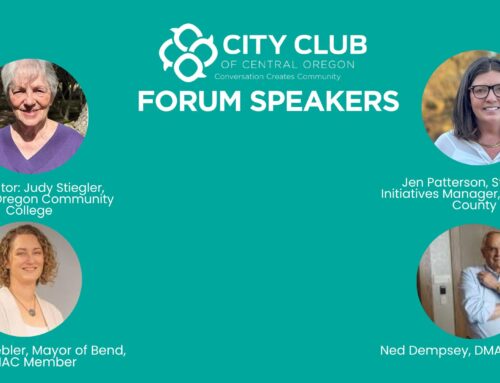
Speakers:
Dr. Ihab Elzeyadi, University of Oregon (Keynote and Moderator)
Cassie Lacy, City of Bend
Jarrod Penttila, OSU–Cascades
Justin Alvarado, Hayden Homes Amphitheater
Owen Murphy, Central Oregon Community College
Dr. Ihab Elzeyadi, University of Oregon (Keynote and Moderator)
Cassie Lacy, City of Bend
Jarrod Penttila, OSU–Cascades
Justin Alvarado, Hayden Homes Amphitheater
Owen Murphy, Central Oregon Community College
Forum Description:
Central Oregon is growing fast, but how can that growth remain sustainable? From city policy and campus design to community partnerships and individual actions, this forum explored what it means to go “low impact” in the High Desert. Experts from across the region shared strategies for energy-efficient design, waste reduction, and climate-conscious living—offering a roadmap for a future that honors both people and place.
Central Oregon is growing fast, but how can that growth remain sustainable? From city policy and campus design to community partnerships and individual actions, this forum explored what it means to go “low impact” in the High Desert. Experts from across the region shared strategies for energy-efficient design, waste reduction, and climate-conscious living—offering a roadmap for a future that honors both people and place.
Key Themes
Designing for Net Zero
Dr. Ihab Elzeyadi opened with a call to action: achieving “net zero” requires not only technology but a willingness to change behavior. Net zero means balancing energy use with energy generation—including emissions embedded in materials. He emphasized that sustainable design benefits people as much as the planet. Natural light, fresh air, and connections to nature enhance health and productivity—factors far more valuable to an organization’s bottom line than energy savings alone.
Dr. Ihab Elzeyadi opened with a call to action: achieving “net zero” requires not only technology but a willingness to change behavior. Net zero means balancing energy use with energy generation—including emissions embedded in materials. He emphasized that sustainable design benefits people as much as the planet. Natural light, fresh air, and connections to nature enhance health and productivity—factors far more valuable to an organization’s bottom line than energy savings alone.
Citywide Climate Goals
Cassie Lacy described Bend’s Climate Action Plan, which targets a 40% reduction in greenhouse gas emissions by 2030 and 70% by 2050. The city’s own facilities are leading by example, from solar-ready public buildings to converting fleet vehicles to hybrid and electric. Communitywide, Bend focuses on accessible solutions—helping residents transition to clean energy, improve home efficiency, and reduce waste. New ordinances and grant programs encourage electrification and renewable power adoption.
Cassie Lacy described Bend’s Climate Action Plan, which targets a 40% reduction in greenhouse gas emissions by 2030 and 70% by 2050. The city’s own facilities are leading by example, from solar-ready public buildings to converting fleet vehicles to hybrid and electric. Communitywide, Bend focuses on accessible solutions—helping residents transition to clean energy, improve home efficiency, and reduce waste. New ordinances and grant programs encourage electrification and renewable power adoption.
Innovation in Higher Education
Jarrod Penttila shared how OSU–Cascades is transforming a former pumice mine into Oregon’s first triple net zero campus—achieving balance across energy, water, and waste. Energy is shared between buildings through geothermal and heat exchange systems, while reclaimed water infrastructure and native landscaping conserve natural resources. At COCC, Owen Murphy described their Climate Action Plan and curriculum updates that embed sustainability into teaching across disciplines, empowering students to make environmentally conscious decisions in every field.
Jarrod Penttila shared how OSU–Cascades is transforming a former pumice mine into Oregon’s first triple net zero campus—achieving balance across energy, water, and waste. Energy is shared between buildings through geothermal and heat exchange systems, while reclaimed water infrastructure and native landscaping conserve natural resources. At COCC, Owen Murphy described their Climate Action Plan and curriculum updates that embed sustainability into teaching across disciplines, empowering students to make environmentally conscious decisions in every field.
Sustainability in Action
Representing the private sector, Justin Alvarado discussed the Hayden Homes Amphitheater’s impressive 93% solid waste diversion rate—well above the county’s 26% average. Efforts like banning plastic bottles, composting food waste, and reusing event materials have made the venue a national model for Live Nation properties.
Representing the private sector, Justin Alvarado discussed the Hayden Homes Amphitheater’s impressive 93% solid waste diversion rate—well above the county’s 26% average. Efforts like banning plastic bottles, composting food waste, and reusing event materials have made the venue a national model for Live Nation properties.
Challenges and Calls to Action
Panelists agreed that behavior change remains the greatest challenge—whether addressing misinformation, overcoming “either/or” thinking between priorities like housing and sustainability, or inspiring consistent community habits. Their advice to attendees:
Panelists agreed that behavior change remains the greatest challenge—whether addressing misinformation, overcoming “either/or” thinking between priorities like housing and sustainability, or inspiring consistent community habits. Their advice to attendees:
• Get involved—join local climate committees or contact City Council.
• Start conversations about sustainability at home, work, and school.
• Rethink waste—reuse, donate, and compost whenever possible.
• Keep learning—take a class or explore new ways to reduce your environmental foot-print.
Looking Ahead
From municipal policy to live music venues, Central Oregon is proving that sustainability can be woven into every aspect of community life. The forum underscored a shared message: progress toward a low-impact future will take innovation, collaboration, and the everyday choices of individuals who care about the place they call home.
From municipal policy to live music venues, Central Oregon is proving that sustainability can be woven into every aspect of community life. The forum underscored a shared message: progress toward a low-impact future will take innovation, collaboration, and the everyday choices of individuals who care about the place they call home.